
The Blessed Jordan River | Baptism, Holy Water, and the Sacred Flow of Faith
Baptism, renewal, and the moment everything changes
Introduction: A Beginning That Still Echoes
Some places in Scripture mark an ending. Others mark a beginning.
The Jordan River is one of those rare places where something begins, and keeps beginning, again and again, in the lives of believers across every generation. It is not simply a river running through the geography of the Holy Land. It is a threshold. A place of crossing, of decision, of return. Long before Christ stepped into its waters, the Jordan marked the boundary between wilderness and promise, between wandering and arrival. And when Jesus came to John the Baptist on its banks, the river became something more again — the site of a revelation that still echoes through every Christian baptism prayed over since.
For a deeper understanding of how holy water carries this meaning into everyday Christian life, begin with Holy Water | A Living Tradition of Faith, Blessing, and Presence.
The Jordan River in Scripture: A Place of Crossing
The Jordan appears at some of the most pivotal moments in the entire biblical narrative, and in each one, it is doing the same essential thing: marking a passage from one kind of life to another.
In the Old Testament, it is the boundary between forty years of wilderness and the land God had promised. When the Israelites cross the Jordan in Joshua 3, they are not simply crossing a river, they are stepping, on dry ground, into something they had waited generations to receive. The crossing demanded trust. The water parted, but only when the priests' feet touched the edge. Faith moved first. The miracle followed.
This layered meaning, of leaving uncertainty behind, of entering into promise, of trusting God without being able to see what lies on the other side, carries directly forward into the New Testament, where the Jordan becomes the stage for the most defining moment of Christ's public life.
The Baptism of Christ: When Heaven Opened
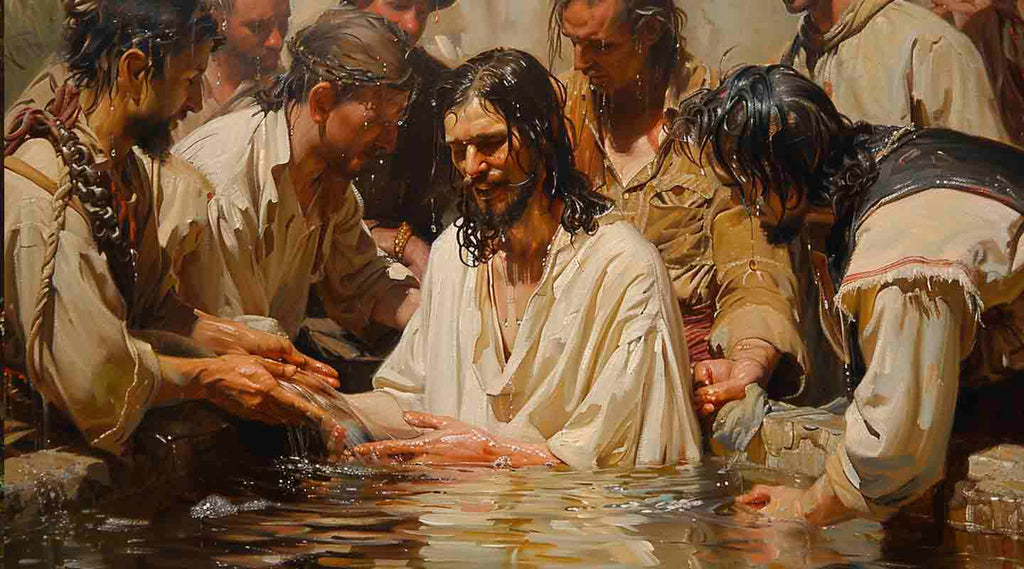
The Gospel accounts of Christ's baptism in the Jordan River (Matthew 3:13–17) give us one of the most theologically dense moments in all of Scripture — compressed into just a few verses, but carrying the weight of the entire Christian faith within them.
Jesus comes to John not as a distant, untouchable figure, but as one who steps fully and deliberately into the human condition. He does not need baptism. He has nothing to be cleansed of. He comes because obedience matters, because solidarity with humanity matters, and because what is about to happen in that river needs to happen in order for everything else to follow.
And then, the heavens open. The Spirit descends like a dove. And the Father speaks words that have never lost their force: "This is my beloved Son, in whom I am well pleased."
In a single moment at the Jordan River, the Trinity is revealed, a mission is confirmed, and an identity is declared before the whole watching world. This is not only a baptism. It is the beginning of everything.
The meaning and role of holy water in Christian life developed from this very moment, a connection explored more deeply in Holy Water | A Living Tradition of Faith, Blessing, and Presence.

Baptism: More Than a Ritual
For Christians across every tradition, baptism is not merely symbolic, it is foundational. It represents cleansing from sin, rebirth into a new life, and entry into the community of faith. It is the moment when a person crosses their own Jordan, leaving one way of living behind and stepping, often trembling, into something they cannot yet fully see.
The Jordan River holds a unique and irreplaceable place in this theology because it is where Christ himself entered the waters, not out of need, but out of love. By stepping into the Jordan, he sanctified the act of baptism for every person who would follow. He went first, as he always does, so that we would not have to go alone.
This is why the Jordan River is not simply remembered as a historical site. It is returned to, through prayer, through reflection, through the small daily gestures that reconnect believers to the moment their own faith began. Over time, this meaning gave rise to different practices across Christian traditions, explored further in Holy Water Traditions Across the Christian World.

Holy Water from the River Jordan: A Connection to the Beginning
For many believers, the desire to keep holy water from the Jordan River nearby is not about possessing something rare or exotic. It is about something simpler and more personal than that, return.
Return to intention, when daily life has pulled attention in too many directions. Return to identity, when the noise of the world has made it harder to remember who we are and whose we are. Return to the foundational moment of faith, not as a sentiment, but as a practice.
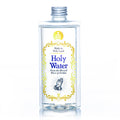
Holy water from the Jordan River carries that meaning in a direct and tangible way. Kept by the door, used before prayer, or simply present in a corner of the home dedicated to reflection, it becomes a quiet but consistent anchor, a daily reminder that faith is not only something believed, but something lived, touched, and returned to.

Pilgrimage Today: Why People Still Come to the Jordan River
The baptismal sites of Qasr al-Yahud and Yardenit receive thousands of pilgrims from around the world every year, and the numbers have never meaningfully declined. People come from every continent, every denomination, every season of life.
What draws them is not only history, though the history is extraordinary. It is something harder to articulate but immediately recognisable when felt. The desire to stand in the same water. To reconnect with something foundational before the busyness of ordinary life reclaims them. To step out of routine, if only for an afternoon, and into a space where reflection becomes unavoidable.
Many come to renew their baptismal vows at the Jordan River, standing in the water, speaking the words again, meaning them differently than they did the first time. Others come simply to be present, without agenda or expectation. And what most of them find is not something dramatic or overwhelming. It is something steadier and more sustaining than drama, a quiet sense of being exactly where they are supposed to be.
For those considering a pilgrimage to the Jordan River, baptism sites such as the traditional location of Bethany Beyond the Jordan and the more accessible Yardenit offer opportunities to step into the same waters that hold such deep meaning in the Christian faith. Whether for baptism, renewal of vows, or quiet reflection, visiting these places can be a powerful and personal experience. For many, however, the meaning of the Jordan does not depend on travel alone, it can be lived daily, wherever faith is practiced.

From the River to Daily Life
Most believers will never stand physically in the Jordan River. For the vast majority of the faithful, that particular pilgrimage will remain a dream rather than a reality, and that is perfectly alright, because the meaning of the Jordan was never meant to stay in one place.
It can be lived in small daily rituals: making the sign of the cross with water before leaving home, pausing before prayer to bless yourself with intention, keeping holy water somewhere visible rather than somewhere forgotten. It can be lived in moments of decision, those personal Jordans where something in the life of faith must be crossed, and trust has to move before the path becomes clear.
The gesture does not need to be large. It needs to be repeated. Because it is in the repetition, day after day, ordinary morning after ordinary morning, that the meaning takes root and the Jordan River begins to live in daily life rather than only in history.
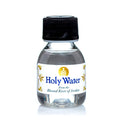
Many believers choose to keep a small vial of holy water nearby, allowing these small daily gestures to become part of a consistent rhythm rather than occasional practice.
For practical ways to build this into your routine, see Seven Ways to Use Holy Water in Daily Life.
The Jordan and Mary's Well: Beginning and Preparation
To understand the Jordan River fully, it helps to hold it alongside another sacred water source that defines a different and equally essential dimension of Christian faith — Mary's Well in Nazareth.
The contrast between the two is both striking and deeply instructive. The Jordan is public, a wide, visible river carrying the weight of a moment declared before witnesses, with heaven itself opening above it. Mary's Well is hidden, a quiet spring in a small town, known only to those who lived there, the backdrop of a faith lived in private long before it was ever displayed in public.

The Jordan is the moment of mission. Mary's Well is the preparation that made that mission possible. One is revelation made visible to the world. The other is the obedience and humility that preceded it in silence. Together, they do not compete, they complete the picture of a faith that is both deeply interior and genuinely public, both rooted in the hidden life and called outward into the world.
For a deeper reflection on how these two sacred sources speak to each other, see Jordan River and Mary's Well: Two Sacred Sources of Faith and Renewal.
A Faith That Begins Again
The Jordan River is not only about what happened two thousand years ago. Its deepest gift to the believer is not historical, it is personal.
It is about the possibility of beginning again. Again in faith, when doubt has accumulated. Again in intention, when routine has dulled awareness. Again in direction, when life has drifted further from God than the soul is comfortable admitting.
Every believer, at some point, stands at their own Jordan. Facing a decision that cannot be postponed. A change that has been resisted too long. A return to faith that feels both necessary and frightening. The river does not make that crossing easy. But it reminds us that the crossing has been made before, by a people who waited forty years, and by a Son who stepped in first so that we would never have to step in alone.
That is why the River Jordan's meaning continues. Because beginnings, in the life of faith, are never finished.
Frequently Asked Questions About Jordan River Holy Water
Q: Why is the Jordan River important in Christianity?
The Jordan River is the site of Jesus's baptism, the moment that revealed the Trinity, confirmed his identity as the Son of God, and marked the beginning of his public ministry. It also holds deep Old Testament significance as the boundary the Israelites crossed to enter the Promised Land, making it one of the most theologically layered sites in all of Scripture.
Q: Is holy water from the Jordan River different from other holy water?
All holy water is blessed, but water connected to the Jordan River carries a unique and direct symbolic link to Christ's own baptism. For many believers, that connection adds a personal and devotional depth that makes it especially meaningful for prayer and daily use.
Q: How can I use Jordan River holy water at home?
It can be used for blessings, before personal prayer, when leaving or entering the home, or in any moment of quiet recollection throughout the day. Even a small, consistent gesture — blessing yourself each morning — builds a meaningful habit of return over time.
Q: Can holy water from the Jordan be given as a gift?
Yes, and it is a particularly fitting gift for baptisms, confirmations, first communions, or any significant moment of faith. It connects the recipient to the place where Christian baptism itself was sanctified by Christ.
Q: Do I need to visit the Jordan River to experience its meaning?
Not at all. While pilgrimage to the Jordan is a powerful and transformative experience, the meaning it carries can be lived daily, through prayer, through intentional use of holy water, and through the small faithful gestures that reconnect us to the foundations of our faith wherever we are.
Q: Can I be baptized or renew my vows at the Jordan River?
Yes — and for many pilgrims, this is the most meaningful moment of their entire Holy Land journey. Both Qasr al-Yahud and Yardenit offer facilities for baptisms and the renewal of baptismal vows directly in the Jordan River. Many pilgrim groups arrange this in advance as a central part of their itinerary. Whether prayed for the first time or renewed after decades of faith, the experience of standing in the Jordan carries a weight that is difficult to put into words.
Q: Is there a best time of year to visit the Jordan River?
The Jordan River baptismal sites can be visited year-round, but spring and autumn are generally the most comfortable seasons for pilgrimage, mild temperatures, manageable crowds, and a landscape that is green and alive. The Feast of the Baptism of the Lord, celebrated in January, draws particularly large numbers of pilgrims to the Jordan each year, many of whom come specifically to renew their baptismal vows on that liturgically significant day.
Related Articles and Further Reading
Faith grows when it moves from idea to action. These articles will help you explore, understand, and gently incorporate holy water into your daily rhythm:
-
Holy Water | A Living Tradition of Faith, Blessing, and Presence
Understand the deeper meaning of holy water in Christian life. -
Seven Ways to Use Holy Water in Daily Life
Simple ways to integrate this practice into everyday routines. -
Mary’s Well in Nazareth: Where Quiet Faith Took Root
Explore the hidden side of faith and preparation. -
Holy Water Traditions Across the Christian World
See how different Christian traditions understand and use holy water.
SHARE: