
Holy Water Traditions Across the Christian World

Discover how sacred water unites history, worship and home devotion
Holy Water holds a profound place in Christian traditions worldwide. From its biblical roots to its use in daily devotion and sacred ceremonies, this blessed element symbolizes purification, renewal, and God’s grace. Christians across denominations embrace Holy Water as a tangible reminder of their faith, connecting them to Christ’s teachings and the promises of baptism. To better understand how Holy Water connects with other sacred elements of faith, you can explore our deeper guide on Christian Symbols from the Holy Land and Their Meaning, where water, the Cross, olive wood, and relics are brought together into one spiritual narrative.
This guide focuses on how holy water is used across different Christian traditions and cultures, exploring how this sacred element is lived, celebrated, and expressed throughout the world.
The Biblical Origins of Holy Water
The roots of holy water reach deep into Scripture. In the Old Testament, water symbolises both life and purification, the Spirit hovering over the waters in Genesis 1:2, Noah’s family saved through the flood (1 Peter 3:20–21), and Moses leading Israel through the Red Sea (Exodus 14:21–22) all foreshadow Baptism. In the New Testament, Jesus is baptised by John in the Jordan River; the heavens open and the Spirit descends like a dove (Matthew 3:13–17). Jesus later tells Nicodemus that one must be “born of water and the Spirit” (John 3:5). These passages reveal that water is more than a natural element, it is a sacrament of new life and a sign of God’s covenant.
For a deeper look into how these biblical foundations shape daily Christian devotion, see our full guide on Holy Water: Origins, Meaning and Daily Practice.
Early Church Practice and Blessing
From the first centuries, Christians incorporated water into liturgy. Baptism in natural running water soon gave way to fonts and baptisteries as congregations grew. The faithful blessed themselves upon entering churches as a reminder of their baptismal identity. Bishops and priests blessed water using prayers recalling Christ’s baptism and the healing of the pool of Bethesda (John 5:1–9). The blessing of water on Epiphany remains a beloved tradition in Eastern Christianity, where priests plunge the Cross into water in memory of Jesus’ baptism and distribute blessed water to homes.

Christ’s Baptism Site: The Jordan River
The Jordan River holds a unique and central place in Christian faith as the site where Jesus Himself entered the waters and was baptized by John the Baptist. The Gospel recounts this moment with striking clarity: “As soon as Jesus was baptized, he went up out of the water. At that moment heaven was opened, and he saw the Spirit of God descending like a dove” (Matthew 3:16). This event did not merely mark the beginning of Christ’s public ministry, it revealed the Trinity and sanctified the waters of the world.

Located near Jericho at the traditional site of Qasr al-Yahud, the Jordan River has become one of the most meaningful pilgrimage destinations for Christians. For centuries, believers have come here not only to remember Christ’s baptism, but to renew their own. Yet the river’s significance stretches even further back. It was here that Joshua led the Israelites into the Promised Land (Joshua 3:17), and where the prophet Elijah was taken up into heaven (2 Kings 2:11). These layers of biblical history transform the Jordan into more than a river, it becomes a living symbol of transition, purification, and divine encounter, making its waters especially meaningful for prayer and blessing.
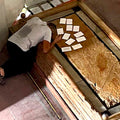
These sacred waters are closely connected to other holy sites in Jerusalem, including the Church of the Holy Sepulchre, where Christ’s death and resurrection are commemorated, and the Stone of Anointing, where His body was prepared for burial.
Mary’s Well: A Source of Purity and Grace
In the heart of Nazareth, Mary’s Well is revered as a place intimately connected to the daily life of the Virgin Mary. According to long-standing Christian tradition, this is where Mary would draw water—ordinary moments that unfolded within an extraordinary calling. The well is closely associated with the mystery of the Annunciation, when the angel Gabriel appeared to her and declared: “Greetings, you who are highly favored! The Lord is with you” (Luke 1:28).

Over the centuries, this quiet spring has become a place of prayer, reflection, and devotion. Pilgrims who visit Nazareth often pause here to contemplate Mary’s humility, her obedience, and her complete trust in God’s will. Water drawn from this place carries a deeply symbolic meaning, not only of purity, but of openness to grace. Just as Mary received the Word of God into her life, believers are invited to receive that same grace into their own. For many, holy water from Mary’s Well becomes a gentle but powerful reminder of faith lived in simplicity, trust, and surrender.

Diverse Traditions Across Denominations
Holy water traditions vary across the Christian world:
- Catholic and Orthodox Churches place fonts at church entrances for the faithful to sign themselves with water, invoking the Holy Trinity. In the Byzantine rite, the Great Blessing of the Waters on Theophany includes prayers for the sanctification of the natural world.
- Anglican and some Lutheran communities bless water at baptisms and may sprinkle people and church walls during Easter.
- Protestant denominations may focus more on Baptism itself rather than blessed water, but many still recognize the symbolic power of water in worship.
- Ethiopian Orthodox Christians celebrate Timkat, a reenactment of the baptism of Jesus, when the faithful process with sacred icons to local rivers and plunge into the water for blessing.
Though practices differ, the message is the same: water is a tangible sign of God’s grace that cleanses, heals and consecrates.

Incorporating Holy Water into Modern Faith
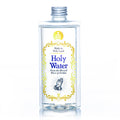
In today’s fast-paced world, Holy Water continues to provide solace and connection. Whether through a bottle of Holy Water from the Jordan River or a keepsake vial from Mary’s Well, these sacred elements remind believers of their spiritual journey. They encourage moments of reflection, prayer, and an enduring connection to Christ’s promises. As Isaiah 12:3 proclaims, “With joy you will draw water from the wells of salvation.” Holy Water invites Christians to live their faith daily, seeking God’s grace and protection in every moment of life, both in times of peace and in moments of uncertainty.
Just as water reflects purification and renewal, the Cross represents sacrifice and redemption. You can explore this deeper connection in The Meaning of the Cross in Christianity, where these symbols are united in the story of salvation.
For Christians unable to visit the Holy Land, Holy Water from the Jordan River or Mary’s Well provides a powerful way to connect to these sacred sites. It allows believers to partake in the blessings of the Holy Land without physically being there, enriching their spiritual journey and serving as a reminder of the promises of God. As Jesus declared in John 7:37-38, “If anyone is thirsty, let him come to me and drink. Whoever believes in me, as Scripture has said, rivers of living water will flow from within them.”
These sacred waters, blessed by their association with Christ’s life and Mary’s purity, invite Christians to reflect on their faith and draw strength from the divine narrative that continues to inspire millions worldwide.

Pilgrimage and Water from the Holy Land
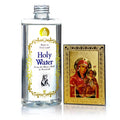
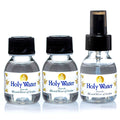
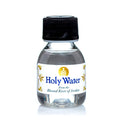
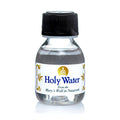
For those unable to travel to these sacred places, bringing the Holy Land into your home becomes a meaningful act of devotion. Our Jordan River Holy Water, collected at the very site of Christ’s baptism, and Mary’s Well Holy Water, drawn from Nazareth, allow you to connect physically and spiritually with these biblical locations. Each vial is carefully prepared and accompanied by a certificate of authenticity, making it not only a devotional item, but a tangible link to the Gospel itself.
Holy Water in Daily Life
Holy water is not reserved for church services; it belongs in the home. Here are simple ways to integrate it:
- Bless your family: Draw the sign of the cross on each family member’s forehead before work or school. Remind them that they are baptized and loved.
- Sanctify your home: Sprinkle holy water in doorways and rooms while praying Psalm 91. The prayer request service can even arrange for a priest in Jerusalem to offer prayers at holy sites on your behalf.
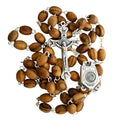
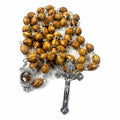
- Begin prayer with water: Keep a small font near your prayer corner. Before reading Scripture or reciting the Rosary, dip your fingers and sign yourself, recalling your baptism. A holy water font made from olive wood can complement your devotional space.
- Use in times of distress: Holy water is often used to combat fear or temptation. A quiet blessing can remind you that God’s presence drives away darkness. Many people keep a vial in their car or purse for spontaneous prayer.
These small practices ensure that Holy Water remains a living, active part of your daily faith journey, deepening your connection to God and the Holy Land.
Theological Meaning and Quotes
The power of holy water lies not in superstition but in faith. The early Church Fathers wrote about the sanctifying nature of water blessed in the name of Christ. St. Basil the Great taught that water receives “the ability to sanctify through the invocation of the Holy Spirit.” St. Irenaeus spoke of water as the “vehicle of God’s love” because, in Baptism, we are united to Christ’s death and resurrection (Romans 6:3–4). The Church continues to teach that the Holy Spirit works through matter to convey grace. When a believer uses holy water with devotion, they participate in the mystery of the Incarnation, the Word made flesh and dwelling among us (John 1:14).
To enrich your spiritual practice, our store offers:
- Jordan River Holy Water – collected at the site of Jesus’ baptism, perfect for Baptismal renewal and house blessings.
- Mary’s Well Holy Water – drawn from the well in Nazareth where Mary drew water daily, connecting your prayers to her “yes.”
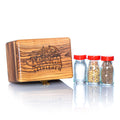
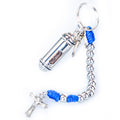
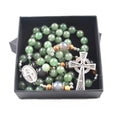
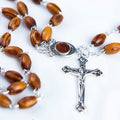
- Holy Water in olive wood boxes – handcrafted from olive wood, these beautiful accessories keep sacred water safe and readily available at home. Pair them with a Comfort Cross or a Rosary to create a devotional corner.
- Prayer Request Service – submit your intentions to be prayed for at the Church of the Holy Sepulchre. A messenger will light a candle and deliver your prayer request, and you will receive a certificate of prayer.

A Closing Reflection: Water That Still Speaks
Holy Water is more than a tradition passed through centuries, it is a living reminder that God meets us in the ordinary elements of life. From the Jordan River to the homes of believers around the world, water continues to carry the message of renewal, grace, and transformation.
Each drop speaks of baptism, of new beginnings, and of a God who enters into human history not from a distance, but through tangible, meaningful signs. Whether used in prayer, blessing, or quiet reflection, Holy Water invites us to return again and again to the source of life.
Holy Water is just one of many sacred elements that carry deep spiritual meaning. To explore how it connects with symbols like the Cross, olive wood, and relics from the Holy Land, visit our complete guide to Christian Symbols from the Holy Land and Their Meaning.
Frequently Asked Questions about Holy Water Traditions
Q: What makes water “holy” in Christian tradition?
Water becomes holy when it is blessed by a priest or bishop, usually with prayers invoking the Holy Trinity and recalling Jesus’ baptism. The blessing calls the Holy Spirit to descend and sanctify the water. In Catholic and Orthodox practice, priests use specific rites that link the water to salvation history. The effectiveness comes from God’s grace and the faith of the one using it, not from magic.
Q: Is water from the Jordan River considered holier than other blessed water?
The Jordan River is revered because Jesus was baptized there, but any water can be blessed by the Church and become holy. Water from the Jordan is special because of its scriptural significance. Using it can deepen devotion, but the grace of God is not limited to a particular location. Faith, humility and love are the real determinants of spiritual benefit. You can explore more about its significance here: The Blessed Jordan River.
Q: Can I bless my own water at home?
Lay people may pray over water, but it does not become “holy water” in the sacramental sense unless blessed by a priest or deacon using the Church’s rite. However, you can ask a priest to bless water you bring to church, or you can obtain holy water from your parish. If you cannot access a priest, praying with regular water while recalling your baptism can still be spiritually meaningful.
Q: How should I store and use holy water at home?
Keep holy water in a clean container or font, ideally made of a durable and sacred material like olive wood. Use it reverently, as you would any sacramental. Avoid discarding it down drains that lead to sewers; instead, pour unused water onto the ground or into plants. When the water becomes unclean, refill it with newly blessed water. Small olive wood bottles available in our shop are perfect for this purpose.
Q: Is it appropriate to drink holy water?
In some traditions, people drink holy water as an act of faith, especially on the Feast of the Epiphany or Theophany. However, holy water is usually intended for blessing and sprinkling. If you intend to drink it, ensure it is clean and was blessed for that purpose. Always do so with reverence, praying that God’s grace will fill your life.
Q: How can I introduce holy water into family prayer?
Begin by explaining to children that holy water reminds us of Baptism and God’s love. Keep a small font near the door or family altar. Before prayers, invite each family member to bless themselves. You can also sprinkle water over family members before bed, praying a short verse like “The Lord is my shepherd” (Psalm 23:1). If you have a vial of Jordan River Holy Water, share its story and let children hold it respectfully.
Q: What is the difference between holy water and other sacramentals like oil or salt?
Holy water symbolizes cleansing and rebirth, while blessed oil is used for anointing in sacraments and healing. Blessed salt often accompanies exorcism prayers, symbolizing wisdom and incorruptibility. All sacramentals prepare us to receive grace and remind us of the sacraments, but holy water is the most widely used in daily devotion.
Q: Does using holy water guarantee protection from harm?
Holy water is not a talisman. It is a sacramental that points to God’s grace. Used with faith, it can be a powerful reminder of God’s protection and presence. Its efficacy depends on the openness of your heart and your relationship with Christ. As the Catechism teaches, sacramentals “prepare us to receive grace and dispose us to cooperate with it” (CCC 1670).
Related Articles and Further Reading
Continue your journey through the sacred traditions of the Holy Land and deepen your understanding of Christian faith:
- Meaning of Holy Water: Origins and Daily Practice – a detailed look at the theology and practical use of holy water in personal devotion.
- How to Pray the Rosary: History and Meditation – discover the background of the Rosary and how to integrate holy water into Rosary prayer.
- Meaning of the Cross in Christianity – explore how the Cross complements the symbolism of holy water by pointing to Christ’s sacrifice and victory.
- The True Cross: History, Legends and Relics – learn about the discovery of the True Cross and how relics connect with sacramentals like holy water.
- The Church of the Holy Sepulchre – read about the sacred sites within the church, including Golgotha and the Stone of Anointing, where holy water rituals often take place.
These articles create a cohesive journey through Christian traditions, linking water, prayer and Christian symbols in a way that enriches faith and understanding.
SHARE: