
The Stone of Anointing | Where Jesus Was Prepared for Burial

A Sacred Place of Love, Mourning, and Hope Inside the Holy Sepulchre
The Stone of Unction(Anointing) in the Gospel Narrative
The Stone of Anointing is traditionally identified as the place where the body of Jesus was laid after being taken down from the Cross. The Gospel of John describes this moment with striking intimacy:
“Later, Joseph of Arimathea asked Pilate for the body of Jesus… Nicodemus brought a mixture of myrrh and aloes… taking Jesus’ body, the two of them wrapped it, with the spices, in strips of linen” (John 19:38–40).
The use of oils and spices at this moment also connects deeply with other sacred elements such as Holy Water, which symbolizes purification and new life. You can explore this connection in Holy Water: Origins, Meaning and Daily Practice.
This act was not only a burial preparation, it was an act of love, reverence, and courage. Joseph of Arimathea and Nicodemus risked their standing to honor Christ publicly. The Stone of Anointing represents this moment where grief met devotion, where human hands cared for the broken body of the Saviour.
The Stone of Unction(Anointing) is located just inside the entrance of the Church of the Holy Sepulchre, one of the most sacred sites in Christianity, where the events of the crucifixion, burial, and resurrection are remembered. The stone connects directly to both Golgotha (Calvary) and the tomb of Christ, standing at the threshold between death and resurrection.
In this single sacred space, the final moments of Christ’s earthly life unfold, from the Cross to the tomb, inviting pilgrims not only to remember these events, but to enter spiritually into the mystery of sacrifice, burial, and the promise of resurrection.

To understand how the Stone of Anointing connects with other sacred elements such as the Cross, holy water, and relics from the Holy Land, explore our guide on Christian symbols from the Holy Land, where these elements are brought together into one unified story of faith.


The Meaning of Anointing in Scripture
Anointing runs like a sacred thread throughout the entire Bible, marking moments when heaven touches earth. In the Old Testament, kings were anointed to rule, prophets to speak God’s word, and priests to serve in His presence. Oil was never just oil, it was a visible sign of an invisible calling. When Samuel anointed David, “the Spirit of the Lord came powerfully upon him” (1 Samuel 16:13), revealing that anointing was both a commissioning and a transformation.
This is why the title “Christ” carries such weight. It means “the Anointed One”, the one chosen, set apart, and sent by God. Every anointing in Scripture points forward to Him.
Yet at the Stone of Anointing, we encounter something strikingly different. This is not an anointing of triumph, but of apparent defeat. Not a coronation, but a preparation for burial. And still, perhaps more powerfully than anywhere else, it reveals Christ’s true kingship.
The prophets had already spoken of this paradox.
“They will look on the one they have pierced” (Zechariah 12:10).
“Surely he took up our pain and bore our suffering… he was pierced for our transgressions” (Isaiah 53:4–5).
At this stone, those words become reality. The Anointed One is not crowned with gold, but with wounds. Not lifted onto a throne, but laid upon stone.
And yet, this is precisely where His glory is revealed.
The anointing of Jesus’ body echoes another moment in the Gospel, when a woman poured costly perfume upon Him, and He said:
“She did it to prepare me for burial” (Matthew 26:12).
What seemed like an act of sorrow was already pointing toward something greater. The burial was not the end, it was a passage.
The oils placed upon His body at the Stone of Anointing were acts of love, reverence, and grief. But they were also, unknowingly, preparations for resurrection. In the silence of that moment, between death and the empty tomb, God’s plan was already unfolding.
This transforms how we understand anointing itself. It is not only about blessing or calling, it is about surrender. It is about trusting God even when the outcome is hidden. As St. Paul later writes:
“We were therefore buried with him through baptism into death in order that… we too may live a new life” (Romans 6:4).
The Stone of Anointing teaches that what appears to be an ending in God’s hands is often the beginning of something eternal.
History and Tradition of the Stone
The current Stone of Anointing dates to the reconstruction of the church during the Crusader period, though it commemorates a much earlier tradition rooted in the earliest Christian communities of Jerusalem.
Over centuries, the Church of the Holy Sepulchre has been destroyed, rebuilt, and restored multiple times. Yet the memory of this location has remained constant. Pilgrims from the 4th century onward already described veneration of the site associated with Christ’s burial preparation.
This layered history is explored more deeply in the article about the Holy Sepulchre through the ages.
A Living Place of Prayer Today
Today, the Stone of Anointing is not a relic of the past, it is a living place of prayer. Christians from around the world bring their intentions, grief, gratitude, and hope to this sacred spot. For many, it becomes a place of surrender.
In a world filled with noise, the stone offers silence. In a life filled with uncertainty, it offers grounding. It reminds believers that even in death, God is at work.

Bringing Your Prayer to the Stone of Anointing
Not everyone can travel to Jerusalem, but the desire to be spiritually present remains strong. Through our Prayer Request Service, your personal intentions can be brought to the Church of the Holy Sepulchre and placed at sacred sites such as the Stone of Anointing. Each prayer is carried with care, accompanied by a candle lighting and a small donation made in your name.
This is not a substitute for presence, it is a continuation of it. A way to unite your heart with the place where Christ’s body was lovingly prepared.
Sacred Objects and Personal Devotion
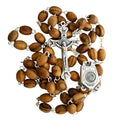
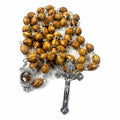
Many believers choose to accompany their prayer life with tangible reminders of faith. A simple olive wood cross, held during prayer, can serve as a connection to the Passion of Christ.
A comfort cross, shaped to fit in the hand, reflects the quiet, personal nature of prayer, much like the silent reverence of the Stone of Anointing itself.
These objects do not replace faith, they deepen it, grounding spiritual reflection in physical reality.

A Place Where Love Was Given Completely and Where Grief Meets Hope
A Place Where Love Was Given Completely and Where Grief Meets Hope
The Stone of Anointing is not only about death—it is about love expressed fully. Here, Christ’s body was cared for with tenderness. Here, humanity responded to divine sacrifice with devotion. And in the stillness before the resurrection, silence itself speaks.
This sacred place marks one of the most fragile and powerful moments in the Gospel story. It is the place of farewell, yet also the moment just before everything changes. To reflect on it is to remember that God meets us not only in glory, but in sorrow, not only in victory, but in vulnerability. And it is precisely in that encounter that transformation begins.
To explore how this moment connects with other sacred symbols and places, visit our guide on Christian symbols from the Holy Land, where these elements come together in one story of faith.
FAQ – The Stone of Anointing Explained
Q: What is the Stone of Anointing in Jerusalem?
The Stone of Anointing is the traditional site inside the Church of the Holy Sepulchre where the body of Jesus was laid after being taken down from the Cross. According to the Gospel of John (19:38–40), Joseph of Arimathea and Nicodemus prepared His body with linen and spices for burial. The stone marks this deeply human and sacred moment, where grief, love, and reverence came together before the resurrection.
Q: Where exactly is the Stone of Anointing located?
It is positioned just inside the main entrance of the Church of the Holy Sepulchre in Jerusalem. As pilgrims enter, the stone lies directly before them, symbolically placing them at the beginning of Christ’s burial journey, between Golgotha (the place of crucifixion) and the tomb of resurrection. This central placement reflects its theological importance within the Passion narrative.
Q: Is the Stone of Anointing the original stone from the time of Jesus?
The current stone dates to later restorations, particularly from the Crusader period, but it commemorates a site that has been venerated by Christians since the earliest centuries. While the physical slab may not be the exact original, the location itself is rooted in continuous tradition and early Christian memory tied to the events described in the Gospels.
Q: Why do pilgrims touch and kiss the Stone of Anointing?
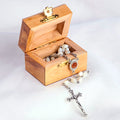
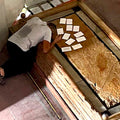
Touching the stone is a deeply personal act of devotion. Pilgrims often kneel, kiss it, or place objects such as rosaries and crosses upon it as a way of connecting physically with the Passion of Christ. This practice reflects the incarnational nature of Christianity, faith expressed not only through belief, but through physical presence and gesture, echoing the reality that Christ truly suffered in the body.
Q: What is the spiritual meaning of the anointing of Jesus’ body?
The anointing represents both mourning and preparation. In Jewish burial tradition, spices and oils were used to honor the dead. In the case of Jesus, this act also carries prophetic significance—fulfilling Scripture and preparing the body that would soon rise again. It reflects sacrificial love, reverence, and the quiet faith of those who remained loyal to Christ even after His death.
Q: What oils or substances are associated with the Stone today?
Today, the stone is often covered with a mixture of fragrant oils poured by clergy and pilgrims. These scents recall the myrrh and aloes mentioned in John 19:39. The aroma creates a sensory connection to the Gospel account, reinforcing the historical and spiritual continuity of Christian devotion across centuries.
Q: Can I have my prayer placed at the Stone of Anointing?
Yes. Through the Prayer Request Service, your personal intentions can be brought directly to the Church of the Holy Sepulchre and placed at sacred sites such as the Stone of Anointing. This allows believers who cannot travel to Jerusalem to still participate in the spiritual life of the Holy Land.
Q: How is the Stone of Anointing connected to the resurrection of Jesus?
The stone represents the final moment before Jesus’ burial in the tomb. It stands at the threshold between death and resurrection, reminding believers that even in the deepest sorrow, God’s plan of salvation is already unfolding. It is not only a place of mourning, but a silent witness to the victory that follows.
Q: How does the Stone relate to other sacred places in the Holy Sepulchre?
The Stone of Anointing is part of a larger sacred journey within the Church of the Holy Sepulchre, which also includes Golgotha (where Jesus was crucified) and the tomb where He rose. Together, these sites form one continuous narrative of the Passion, burial, and resurrection.
Q: What can I use during prayer inspired by the Stone of Anointing?
Many believers choose to hold an olive wood cross or comfort cross during prayer, reflecting on Christ’s suffering and love. These tangible items help focus the mind and heart, much like the physical presence of the stone itself.
Related Articles:
To deepen your understanding of the Passion, burial, and resurrection of Christ, you may find these articles especially meaningful:
-
Walk through the Church of the Holy Sepulchre, where the full mystery of Christ’s death and resurrection unfolds under one roof.
- The Holy Sepulchre Through the Ages. Trace the history of this sacred site across centuries, from its discovery to its survival through wars and rebuilding.
- Stand at Golgotha, the place of the Cross, where sacrifice became redemption.
- Reflect on the True Cross itself, the very wood that carried the weight of salvation.
SHARE: