
Jerusalem Cross Meaning — History, Symbols & Complete Guide

What the Five Crosses Represent and Why This Symbol Endures
What Is the Jerusalem Cross?
The Jerusalem Cross is one of the most recognizable and theologically rich symbols in Christianity—yet its meaning is often only partially understood.
At first glance, it appears simple: one large cross surrounded by four smaller ones. But this structure carries multiple layers of meaning—historical, theological, and devotional—rooted in the very land where the events of the Gospel took place.
From the Crusader Kingdom of Jerusalem to modern Christian devotion, the Jerusalem Cross has remained a symbol of faith that connects believers not only to Christ’s sacrifice, but to the mission of the Church across the world.
This ancient emblem, often referred to as the "Crusader's Cross" or "Five-Fold Cross" or "Cross-and-Crosslets" serves as a reminder of the profound truths of salvation and the global reach of the Gospel.

Historical Origins of the Jerusalem Cross
The Jerusalem Cross dates back to the time of the Crusades in the 11th century, when it became the official emblem of the Latin Kingdom of Jerusalem. It symbolised the hope and triumph of establishing Christianity in the Holy Land after the First Crusade in 1099. Adopted by Godfrey de Bouillon, the cross symbolised both the defense of Christianity and the unity of the Church in reclaiming the Holy Land. The central cross represented Christ, while the four smaller crosses symbolised the four corners of the earth to which the Gospel would be carried. Over centuries, this emblem has continued to signify Christian unity, faith, and perseverance amidst challenges.
The Crusader Cross — Jerusalem Cross by Another Name
The Jerusalem Cross is known by several names, each reflecting a different aspect of its history. "Crusader Cross" refers to its widespread use during the Crusades, when it became the heraldic emblem of the Latin Kingdom of Jerusalem under Godfrey de Bouillon. "Cross-and-Crosslets" is the heraldic term describing its design — a large central cross with four smaller crosses in each quadrant. "Five-Fold Cross" emphasises the five crosses as a unified composition representing Christ's five wounds.
The Crusader Cross specifically carries the weight of that medieval history — soldiers wore it on their tunics and shields as they marched toward Jerusalem. Today it appears in the coat of arms of Georgia and the Ethiopian Orthodox Church, demonstrating how far this symbol travelled from its Holy Land origins.
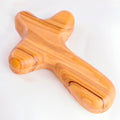
For those drawn specifically to its Crusader heritage, our handmade olive wood Crusader's Cross with Holy Soil carries this historic design in wood from the same land the Crusaders sought.

Symbolic Meanings of the Jerusalem Cross
The Jerusalem Cross carries layers of symbolic meaning that resonate deeply with Christians worldwide:
Christ's Five Wounds: The five crosses together symbolize the wounds Christ received during His Passion, inviting reflection on His ultimate sacrifice for humanity's salvation.

Evangelization: The four smaller crosses represent the Church's mission to spread the teachings of Christ to all nations, inspired by His command in Matthew 28:19, "Go therefore and make disciples of all nations." Each smaller cross is seen as a symbol of the Four Evangelists (Matthew, Mark, Luke, and John) and the Apostles who carried Christ's teachings to the far corners of the world.

Unity in Faith: With its balanced structure, this symbol embodies the interconnectedness of the Christian family, uniting believers in their shared mission of love and service.
Another cross form with similarly layered symbolism is the budded cross, whose trefoil ends express the Trinity and the theological virtues. Its full meaning is explored in this guide to budded cross symbolism in Christian tradition.
For a broader understanding of how different cross forms carry distinct theological meanings, this guide to Christian cross symbolism and meaning explores the full tradition in depth.
Is the Jerusalem Cross Catholic or Orthodox?
The Jerusalem Cross is one of the few Christian symbols that belongs fully to both traditions. It predates the formal Catholic and Orthodox split in popular use, and today it appears in Catholic churches, Orthodox iconography, and Anglican cathedrals alike.
In the Catholic tradition, this emblem is most closely associated with the Crusades and the Latin Kingdom of Jerusalem — a symbol of the Church's historic presence in the Holy Land. It appears in Catholic liturgical art, vestments, and devotional jewelry worldwide.
In the Eastern Orthodox tradition, this symbol carries deep significance as a symbol of Jerusalem itself — the city at the heart of the Orthodox faith. Orthodox Christians use it as a reminder of the Church of the Holy Sepulchre and Christ's sacrifice and resurrection in Jerusalem. It is commonly found in Orthodox iconography, church architecture, and personal devotional items.
For those seeking an olive wood Jerusalem Cross rooted in the living Christian tradition of both East and West, our handcrafted Jerusalem crosses are made by Christian artisans in Bethlehem — in the same land where this symbol was born.
Olive Wood and Handmade Wooden Jerusalem Crosses
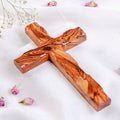
Jerusalem Crosses made from olive wood bring a tangible connection to the Holy Land, where Jesus lived, taught, and fulfilled His ministry. The olive tree, mentioned frequently in the Bible as a symbol of peace and God’s provision, enhances the spiritual significance of these blessed crosses. A handmade olive wood Jerusalem Cross represents more than craftsmanship; it embodies devotion and connection to the sacred history of the Christian faith.
Olive wood Jerusalem crosses inscribed with phrases like "God Bless Our Home" carry added meaning. These blessed crosses are often displayed in homes as symbols of divine protection, faith, and blessing. Their presence serves as a daily reminder of the family’s reliance on God and the sanctity of the home as a place of prayer and unity. By blending natural materials with faith-inspired artistry, these blessed crosses create a bridge between the spiritual and the earthly, making them cherished heirlooms for generations.

The Jerusalem Cross in Modern Christianity
Today, the Jerusalem Cross remains a potent emblem within various Christian contexts:
Religious Orders: It serves as the official emblem of the Order of the Holy Sepulchre, an organization dedicated to supporting Christian presence in the Holy Land.
Pilgrimage Souvenirs: Many pilgrims to Jerusalem and the Holy Land acquire items bearing this symbol, often crafted from olive wood or other local materials, as tangible connections to the sacred sites of Christianity.
Liturgical Use: The symbol is often incorporated into church vestments, altar cloths, and other liturgical items, reflecting its sacred significance.
Incorporating the Jerusalem Cross into Personal Devotion
For many Christians, the Jerusalem Cross is more than a decorative item; it serves as a powerful spiritual tool that enriches personal devotion:
Jewelry: A Jerusalem Cross necklace or bracelet can be a meaningful accessory, serving as a constant reminder of Christ's presence and the believer's mission to live according to His teachings.
Prayer Spaces: Adding a Jerusalem Cross, particularly one made of olive wood, to a prayer corner can enhance meditation on Christ’s Passion and the unity of the Christian community.
Travel Companions: Pilgrims to the Holy Land often bring back Jerusalem Crosses as sacred souvenirs, connecting their journeys to the sites of Christ's ministry.
The Enduring Significance of the Jerusalem Cross
This emblem is a timeless symbol that connects Christians to the heart of their faith. Whether crafted from the sacred olive wood of the Holy Land or adorned with intricate details, it embodies the sacrifice of Christ and the call to spread His Gospel to the world. As a devotional object, it inspires believers to reflect on their faith journey and to embrace the mission of unity, love, and service. By honouring its rich history and profound symbolism, the Jerusalem Cross continues to light the way for Christians seeking to deepen their connection with God and with one another.
The Jerusalem Cross remains an enduring icon of Christian devotion, uniting the sacred past with the present. Its rich history, rooted in the Crusades and the sacred grounds of Jerusalem, continues to inspire believers to deepen their faith and commitment to the mission of unity and peace.
For a broader exploration of rare and meaningful Christian crosses, see our guide to rare crosses and their meanings — covering the budded cross, the Celtic cross, the Orthodox cross and more.
Bring Your Prayer to the Jerusalem Cross
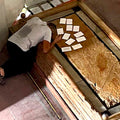
The Jerusalem Cross marks the place where Christ's cross stood. Today, that site is enshrined within the Church of the Holy Sepulchre in Jerusalem — the same church that inspired this symbol's design.
Our Prayer Request Courier carries your personal prayer intention to the sacred sites inside the Church of the Holy Sepulchre — send your prayers to the Rock of Golgotha where the Cross stood, to the Stone of Anointing, or to the Tomb of the Resurrection. A member of our Jerusalem team places your prayer there personally, lights a candle in your name, and sends you a photo as confirmation.

Frequently Asked Questions About the Jerusalem Cross
Q: What is the Jerusalem Cross?
The Jerusalem Cross consists of one large central cross surrounded by four smaller crosses. It is also known as the Five-Fold Cross.
Q: What does the Jerusalem Cross represent?
It is commonly understood to represent Christ and the four Gospels, the spread of Christianity to the four corners of the world, and the five wounds of Christ.
Q: Is the Jerusalem Cross Catholic or Orthodox?
Both. It appears in Catholic, Orthodox, and Anglican traditions, making it one of the most widely shared Christian symbols.
Q: What is the origin of the Jerusalem Cross?
It dates back to the Crusader Kingdom of Jerusalem in the 11th century and has remained a symbol of Christian presence in the Holy Land.
Q: Is the Jerusalem Cross a good gift?
Yes. Its universal symbolism makes it suitable for baptism, confirmation, Christmas, Easter, and personal devotion.
Related Articles
- Rare Christian Crosses and Their Meanings — A broader look at distinctive cross forms across Christian history.
- Budded Cross Meaning — A symbol of the Trinity, the Apostles, and the theological virtues.
- The Meaning of the Cross in Christianity — The theological and devotional significance of the Cross, from Golgotha to daily Christian life.
- Golgotha and Calvary — The Sacred Hill of the Crucifixion — The site where Christ's cross stood, now enshrined within the Church of the Holy Sepulchre in Jerusalem.
- Church of the Holy Sepulchre — A Complete Guide — The holiest site in Christianity, enclosing both Golgotha and the Tomb of the Resurrection.
- Orthodox Cross Meaning — Types, Symbols & History — A guide to the Eastern Orthodox cross, its three bars, and what each element represents.
Related Collections
- Jerusalem Crosses from the Holy Land — Handcrafted in Bethlehem, carrying one of Christianity’s most enduring symbols.
- Olive Wood Crosses and Crucifixes — Traditional crosses carved from olive wood grown in the Holy Land.
-
Budded Crosses from the Holy Land — A cross rich in symbolism, representing the Trinity, the Apostles, and the theological virtues.
SHARE: